

Saudi Arabia Gratuity Guide 2026: Complete End of Service Benefits (EOSB) Explained
Understanding end-of-service benefits in Saudi Arabia is very important for employees because it directly affects their final settlement when leaving a job. Under Saudi Labour Law, gratuity (EOSB) is a legal payment given based on basic salary and years of service.
This Saudi Arabia Gratuity Guide explains everything you need to know about end-of-service benefits, including how gratuity is calculated, eligibility rules, resignation and termination cases, contract types, unpaid leave impact, and important labour law regulations. The article also explains how employees can estimate their EOSB using a Saudi gratuity calculator so they can clearly understand their final pay out.
What Is Gratuity in Saudi Arabia?
Gratuity, commonly referred to as End of Service Benefits (EOSB), is a financial payment provided to employees when their employment relationship ends. It is a legal entitlement under Saudi Labour Law and is designed to reward employees for their service and contribution to their employer.
The amount of gratuity depends on several factors, including salary, years of service, and the reason employment ended. Unlike monthly salary payments, gratuity is a one-time settlement that becomes payable when employment officially concludes.
For many employees, gratuity represents a significant financial benefit. Therefore, understanding how it is calculated is essential before resigning or accepting a final settlement offer.
How Gratuity Is Calculated in Saudi Arabia
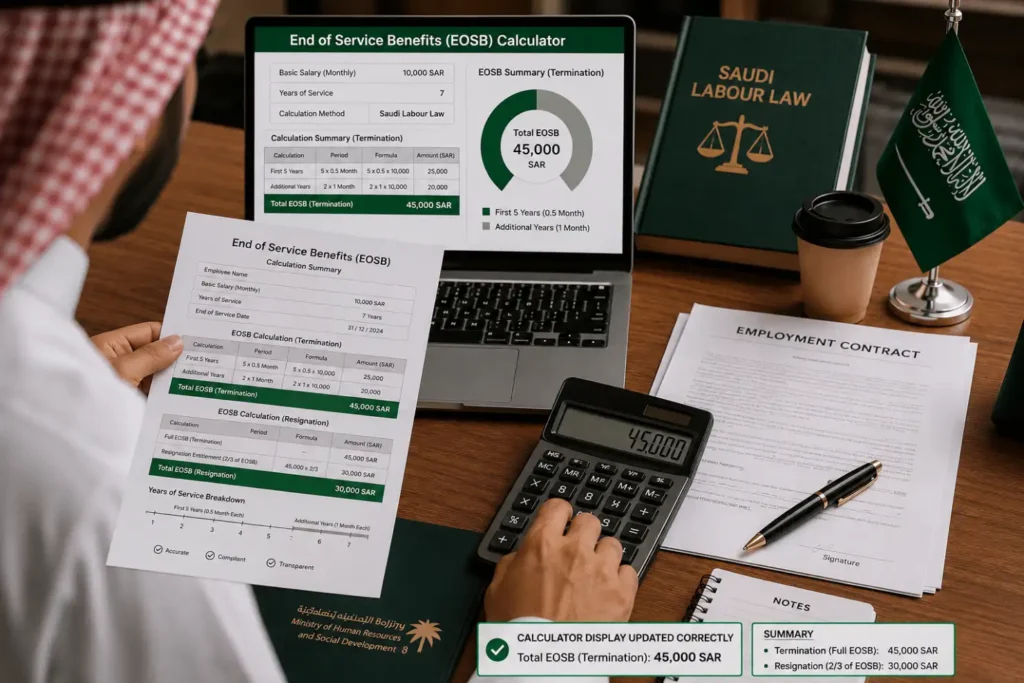
Saudi gratuity calculations are generally based on an employee’s final salary and total years of service. The law uses different calculation rates depending on the duration of employment.
For the first five years of service, gratuity is generally calculated using half a month’s salary for each completed year. After five years, a higher rate is typically applied to additional years of service.
The longer an employee remains with an employer, the greater the gratuity entitlement usually becomes. This structure rewards loyalty and long-term commitment within the workplace.
Employees can also use a Saudi gratuity calculator to estimate their EOSB entitlement before leaving a job. These tools help simplify the Saudi end of service calculation process and provide quick estimates based on employment details.
Why End of Service Benefits Matter
End-of-service benefits provide financial support during career transitions. Employees often use gratuity payments to relocate, support their families, invest in future opportunities, or cover expenses while searching for a new job.
Saudi Labour Law recognizes the importance of protecting employees after the conclusion of employment. The EOSB framework helps ensure workers receive fair compensation based on the duration of their service.
Employers are required to calculate and pay gratuity according to labour regulations. Understanding these rules helps employees verify whether the amount offered is accurate and compliant with the law.
Who Is Eligible for Saudi Gratuity?
Most employees working under Saudi Labour Law may qualify for gratuity benefits after completing the required service period. Eligibility is generally linked to continuous employment and compliance with labour regulations.
Employees who complete at least two years of service typically become eligible for certain gratuity benefits. However, the final entitlement can vary depending on whether the employee resigned voluntarily or the employer terminated the employment relationship.
It is important to review your employment contract and service record before estimating gratuity. Accurate employment dates play a major role in determining eligibility and final settlement amounts.
Saudi Arabia Gratuity Guide: Labour Law and EOSB Regulations
Saudi Arabia’s labour system provides clear guidelines regarding employee rights, employer obligations, and end-of-service benefits. The law establishes standardized methods for calculating gratuity while considering different employment circumstances.
The framework aims to create fairness for both employees and employers. It ensures long-term employees receive appropriate compensation while also providing clear rules for organizations managing workforce transitions.
Employees should stay informed about any labour law updates that may affect gratuity calculations. Labour regulations occasionally evolve to reflect changes in employment practices and economic conditions.
According to the Saudi Labour Law, End of Service Benefits Saudi Arabia employees receive are based on salary, years of service, and the circumstances surrounding the end of employment.
Understanding the Role of Basic Salary
The salary used in gratuity calculations is one of the most important factors affecting the final amount. Employees should understand exactly which salary components are considered when calculating EOSB.
Many workers assume all allowances are included. However, labour law and employment contracts may specify how salary elements are treated for gratuity purposes. Reviewing your contract carefully can help prevent misunderstandings.
Using the correct salary figure ensures more accurate calculations and helps employees verify final settlement offers with confidence.
Resignation Rules Under Saudi Labour Law
Resignation can affect gratuity entitlement depending on the employee’s years of service. Saudi Labour Law includes specific provisions that determine how much gratuity an employee may receive after voluntarily leaving a job.
Employees with shorter service periods may receive a reduced percentage of their gratuity entitlement. As years of service increase, employees generally qualify for a larger portion of their end-of-service benefits.
Before submitting a resignation, employees should calculate their estimated entitlement and review any contractual obligations that may impact their final settlement.
Termination and Gratuity Entitlement
Employees whose employment ends through termination may still be entitled to gratuity benefits. The specific entitlement depends on the circumstances surrounding the termination and compliance with labour regulations.
In many cases, employees who are terminated without serious misconduct remain eligible for full end-of-service benefits. The law seeks to ensure workers are compensated fairly for the time they have dedicated to their employer.
Understanding termination provisions can help employees assess whether their final settlement aligns with legal requirements.
Fixed-Term and Open-Ended Contracts
Saudi Arabia recognizes different employment contract structures. Although contract terms may vary, gratuity calculations generally focus on service duration and salary rather than contract type alone.
Employees should review their contracts carefully to understand any clauses related to termination, renewal, notice periods, and end-of-service benefits. Having a clear understanding of these provisions helps avoid confusion when employment ends.
Employers are expected to apply labour law requirements consistently regardless of contract structure.
How Unpaid Leave Impacts Gratuity
Unpaid leave can influence gratuity calculations because it may affect the total service period used for EOSB calculations. Extended periods of unpaid absence could reduce the number of qualifying service days.
Employees should maintain accurate records of leave periods and review settlement calculations carefully. Verifying service duration helps ensure gratuity calculations are based on correct employment data.
When in doubt, employees should request a detailed breakdown from their employer showing how the final calculation was determined.
When Should Gratuity Be Paid?
After employment ends, employers are generally expected to process final settlements within the legally required timeframe. This settlement may include gratuity, unpaid wages, leave encashment, and other contractual benefits.
Employees should review all figures carefully before accepting payment. Even small errors in service dates or salary information can affect the final amount significantly.
Prompt communication between employers and employees often helps prevent disputes during the settlement process.
Common Mistakes Employees Make
One of the most common mistakes is assuming gratuity calculations are based on total earnings rather than the salary recognized under labour regulations. This misunderstanding often leads to unrealistic expectations regarding final settlements.
Another frequent issue involves incorrect service records. Employees should always verify joining dates, resignation dates, termination dates, and unpaid leave periods before calculating EOSB.
Using a reliable Saudi gratuity calculator can help reduce errors and provide a more realistic estimate of end-of-service benefits.
How to Estimate Your Saudi Gratuity Accurately
Employees who want accurate estimates should gather all relevant employment information before using a Saudi gratuity calculator or EOSB calculator Saudi tool. This includes salary details, employment dates, leave records, and contract information.
Modern gratuity calculators simplify the process by automatically applying labour law formulas. They save time and reduce the risk of manual calculation mistakes.
However, employees should still understand the underlying rules so they can verify the accuracy of any estimated results.
Frequently Asked Questions (FAQs)
1. How Much Gratuity Can I Get After 10 Years of Service in Saudi Arabia?
If you have worked for the same employer for 10 years, your gratuity amount will depend on your final salary and total years of service. Since employees earn a higher gratuity rate after completing five years, long-term employees often receive a significantly larger end-of-service benefit.
2. Will I Still Receive Gratuity If I Resign From My Job in Saudi Arabia?
Yes, in many cases you can still receive gratuity after resigning. However, the amount you receive may depend on how long you worked for your employer and the specific provisions of Saudi Labour Law that apply to your situation.
3. Is Saudi Gratuity Based on Basic Salary or My Full Monthly Salary?
This is one of the most common questions employees ask before leaving a job. Gratuity calculations are generally based on the salary recognized under Saudi Labour Law and your employment contract, which may differ from your total monthly earnings that include allowances and other benefits.
4. What Happens to My End-of-Service Benefits If My Employer Terminates Me?
Employees who are terminated are often concerned about losing their gratuity. In many situations, workers remain eligible for end-of-service benefits, provided the termination is not related to serious misconduct or other circumstances defined by labour regulations.
5. Does Taking Unpaid Leave Affect My Gratuity Calculation?
Yes, it can. Long periods of unpaid leave may impact the total service duration used when calculating gratuity. This is why it is important to review your employment records carefully before estimating your end-of-service benefits.
6. What Is the Easiest Way to Calculate My Saudi Gratuity Online?
The easiest way is to use a Saudi Gratuity Calculator. By entering your salary details and years of service, you can quickly estimate your End of Service Benefits (EOSB) and get a better idea of what you may be entitled to receive when your employment ends
Final Thoughts
Saudi Arabia’s End of Service Benefit system provides important financial protection for employees when their employment ends. Understanding eligibility requirements, calculation methods, resignation rules, and termination provisions helps workers make informed decisions throughout their careers.
Whether you are planning a resignation, reviewing a settlement offer, or simply preparing for the future, understanding Saudi Labour Law gratuity regulations is essential. By combining labour law knowledge with an accurate Saudi gratuity calculator or EOSB calculator Saudi tool, employees can estimate their benefits confidently and ensure they receive the compensation they have earned through years of service.